


Prehabilitation and Rehabilitation

Benefits of Physical Activity
It is well established that physical activity is beneficial for cancer patients. Exercise will improve cancer-related fatigue, physical fitness, muscle strength and lymphoedema, and reduce joint stiffness. The benefits are especially prominent in patients with breast, prostate and haematologic cancers.
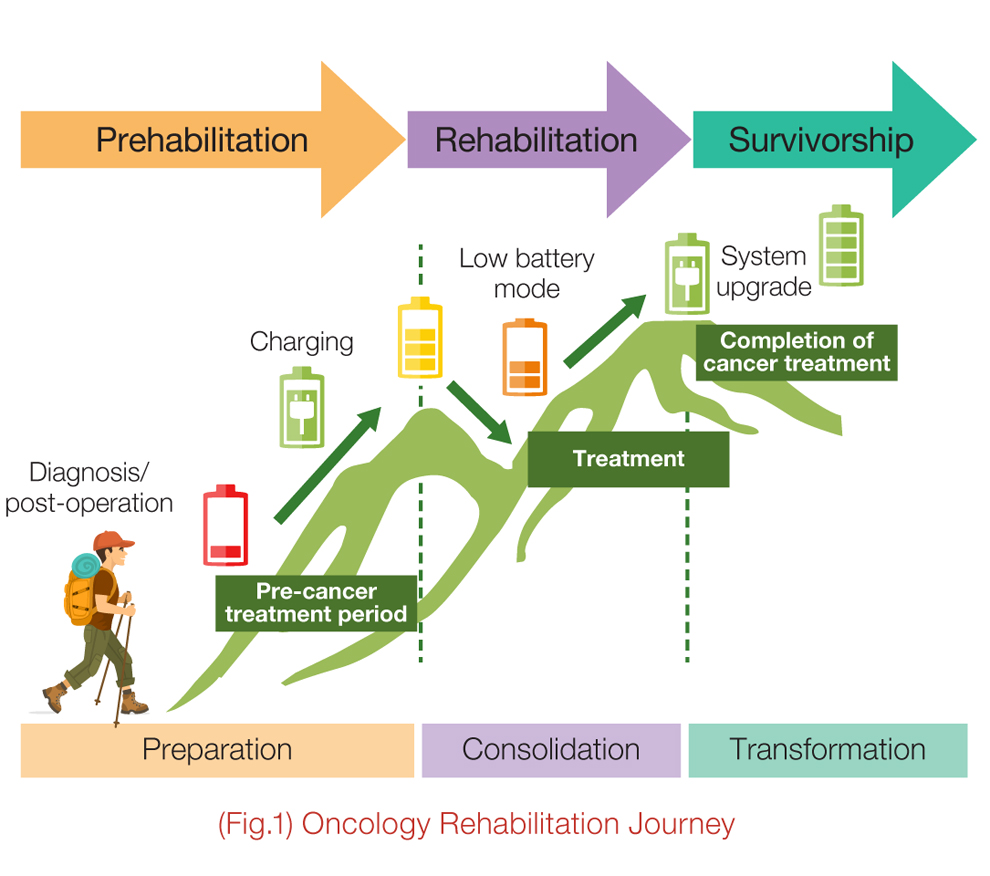
During active cancer treatment, a decrease in fitness level is inevitable. Prehabilitation helps patients prepare the mind and body to function at full potential before undergoing energy-draining cancer treatments. It is like charging a battery before a mountain run (Figure 1). Exercise helps to maintain as much functional independence as possible and reduces unnecessary disability. It offers an effective route to improve quality of life.
The exercise intensity level can be monitored with heart rate measurement and the Borg Scale.
What is cancer-related fatigue?
Cancer-related fatigue is a common problem. It means extreme tiredness most or all of the time. It is not relieved by rest or sleep and can affect you physically and emotionally. It can be very disruptive and makes even simple tasks such as getting dressed difficult.
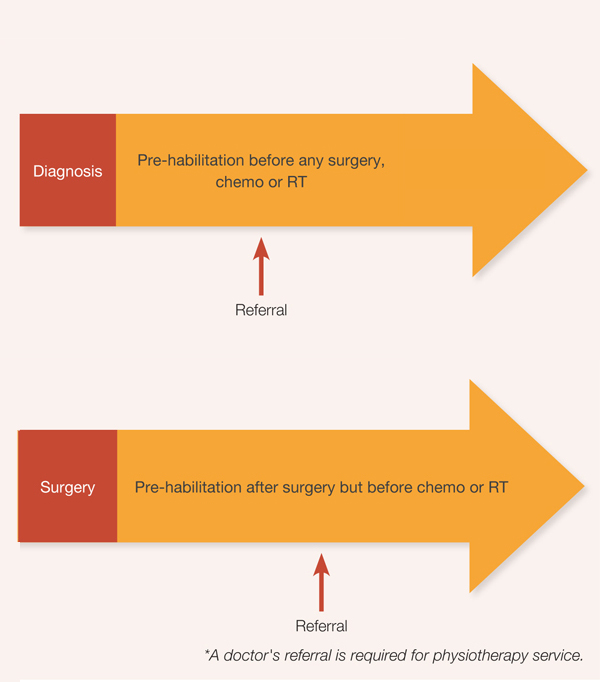
When is the best time to start exercise?
- Once cancer is diagnosed and before any active treatment.
- After surgery but before any high-intensity cancer treatment. This is another good starting point if patients are not able to start exercise before surgery. In general, it takes at least two weeks of exercise to show improvement in the cardiovascular system, muscle strength and functional ability.