



Weight Management and Metabolic Surgery Service
The Weight Management and Metabolic Surgery Service of HKSH provides long-term solutions for patients who struggle with their weight and metabolic disorders.
This comprehensive service is supported by a multidisciplinary team of surgeons, endocrinologists, dietitians, physiotherapists, clinical psychologists, plastic surgeons, anaesthetists and nursing specialists, all with expertise in weight loss. Together, they offer advanced surgical, endoscopic, pharmacological and lifestyle modification options to achieve the goals of sustained weight loss, cure of metabolic disorders and better quality of life.

Obesity
Obesity is a disease. It is a disorder of energy regulation in our body, which is manifested as change of body contour resulting from excessive accumulation of fat. It is not a simple cosmetic problem as perceived in the past. According to 2018 data from the Department of Health of Hong Kong, 50% of the population has a body mass index (BMI) > 23kg/m2 (defined as overweight) or > 25kg/m2 (defined as obese).
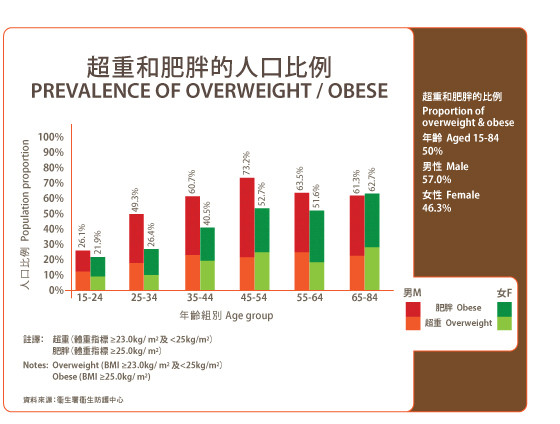
How to measure obesity:
Body mass index (BMI) = body weight in kg / body height in meter square (kg/m 2 ).
| Generalised obesity | Asian | Western population |
|---|---|---|
| Normal | BMI 18-22.9 kg/m2 | BMI 18.5-24.9kg/m2 |
| Overweight | BMI 23-24.9 kg/m2 | BMI 25-29.9 kg/m2 |
| Obesity | BMI =/> 25 kg/m2 | BMI =/> 30 kg/2 |
| Abdominal obesity | ||
| Men | WC* > 90 cm | WC > 102 cm |
| Women | WC >80 cm | WC > 88cm |
* WC: waist circumference (measured between lower border of rib cage and pelvic bone)
Table 1. Criteria of Obesity 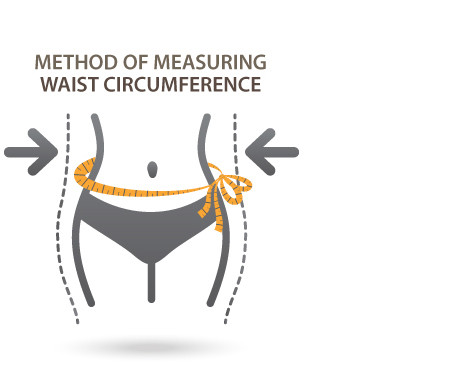
Figure 2. Method of measuring waist circumference
Body composition is also a reference of obesity. Healthy body composition is listed in figure 3 and table 2.
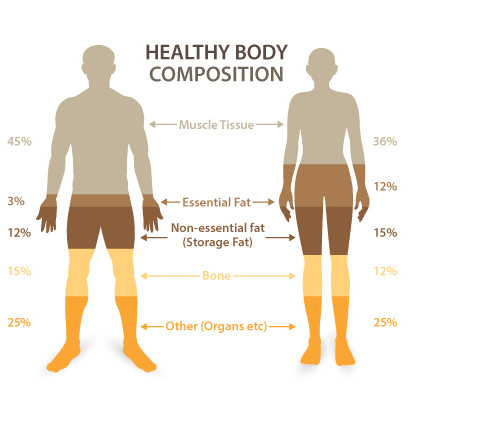
Figure 3. Healthy body composition
Excessive accumulation of fat is an index of obesity.
Body Fat Percentage
| Description | Men | Women |
|---|---|---|
| Essential fat | 2-5% | 10-13% |
| Athletes | 6-13% | 14-20% |
| Fitness | 14-17% | 21-24% |
| Average | 18-24% | 25-31% |
| Obese | >25% | >32% |
Table 2. Reference levels of body fat percentage.
Causes of obesity
There are multiple factors that can lead to obesity. To put it simply, excessive energy may accumulate as fat deposits inside the body if one takes in more calories than one expends. Factors leading to obesity can be genetic, environmental and behavioural and may also include endocrine or metabolic disorders.
Obesity is easily observed in members of the same family. Patients who inherit the obese gene tend to be less responsive to a leptin hormone (lean hormone) from fat cells. Eating habits within the same family may also contribute to obesity when consumption of high-energy content food is the usual eating style. Junk food consumption and a sedentary lifestyle could be other reasons. Patients with some diseases are prone to suffering problems associated with obesity, such as depression, bulimia nervosa, binge eating disorder, hypothyroidism and Cushing syndrome. Medications with steroids or anti-depressants may also cause obesity.
Obesity-associated health problems
More obese patients are associated with a higher risk of developing comorbidities.
| BMI (kg/m2) | Risk of comorbidities | ||
|---|---|---|---|
| Waist circumference < 90cm (M) < 80cm (F) | Waist circumference >/= 90cm (M) >/=80cm (F) | ||
| Normal weight | 18.5-22.9 | Average | Increased |
| Overweight | 23 | ||
| At risk | 23-24.9 | Increased | Moderate |
| Obese I | 25-29.9 | Moderate | Severe |
| Obese II | >30 | Severe | Very severe |
Table 3. Obesity and risk of comorbidities (Asian)
Co-morbidities associated with obesity (energy regulation disorders) are listed in figure 4. 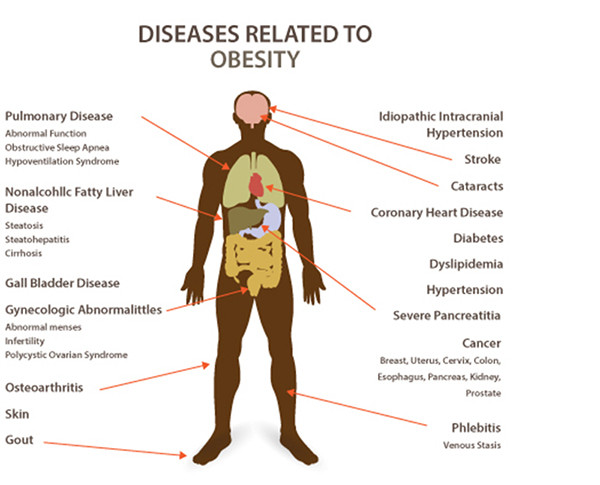
Figure 4. Diseases related to obesity.
As a result of all the possible co-morbidities associated with obesity, life expectancy of an obese patient is estimated to be 5-20 years shorter than the non-obese general population.
Metabolic syndrome
Conceptually, metabolic syndrome is a collection of medical disease risk factors that lead to an increased chance of developing ischaemic heart disease, stroke and diabetes, and thus a shortened life expectancy. The International Diabetes Federation (IDF) has recently launched a new definition of metabolic syndrome:
Central obesity (measured by waist circumference):
Asian (Japanese excluded) : >/=90cm (men), >/=80cm (women)
Plus at least two of the following factors:
- Triglycerides >1.7mmol/L (150mg/dL)
- High-density lipoprotein (HDL) cholesterol <1.03mmol/L (40mg/dL) in men, <1.29
(50mg/dl) in women - Blood pressure >/=130/85 or on treatment
- Fasting blood glucose (FBG) >5.6mmol/L or previously diagnosed diabetes
Solutions to obesity, metabolic syndrome and diabetes
We strive to combat obesity, metabolic syndrome and type 2 diabetes by various methods, with an individualised strategy formulated by our team of experts. The goal of weight control is not limited to improving body weight and appearance, but also a patient’s general health status by ameliorating or curing obesity-related comorbidities.
Detailed evaluations are provided to patients who wish to improve their health status by body weight management. Individualised therapeutic strategies are prepared after evaluation.

Controlling body weight
Methods to control body weight include dieting, exercise and lifestyle modification, pharmacotherapy and interventional treatments such as surgery.
This is regarded as the first line of treatment as well as a crucial component for body weight maintenance after achieving a personal weight target through other treatments. Lifestyle modification alone, however, is not effective for severely obese patients. It has been proven in large-scale studies that only 5–10% of patients can successfully maintain their ideal body weight after a few years.
The success rate will improve with the guidance of professional experts, such as a dietitian or physiotherapist, and close monitoring. For patients interested in following a lifestyle modification therapeutic strategy, our dietitians and physiotherapists will provide a personalised programme.
Medication therapy for overweight or obese patients does not replace dieting, exercise and a healthy lifestyle. In general, patients who use medication lose 3–9% more weight than those who adopt only lifestyle modification. However, not everyone is suitable for weight control via medication. Children, patients older than 70 years (especially those with multiple medical conditions), and pregnant women are not advised to use medication. Potentially, the drugs might have side effects, and one should expect to regain some weight once the treatment is stopped.
Drugs act by suppressing your appetite, reducing nutrient absorption or increasing excretion of energy (sugar) out of your body.
Service scope
- Metabolic and bariatric surgeries
- Laparoscopic sleeve gastrectomy
- Single incision sleeve gastrectomy
- Laparoscopic gastric plication
- Lap-band revision
- Laparoscopic Roux-en-Y gastric bypass
- Laparoscopic sleeve gastrectomy plus duodenojejunal bypass
- Laparoscopic sleeve gastrectomy plus proximal jejunal bypass
- Revisional metabolic and bariatric surgery
- Endoscopic metabolic and bariatric surgery
- Intra-gastric balloon placement
- Aspiration therapy
- Endoscopic sleeve gastroplasty
- Endoscopic revision of bariatric procedures
- Medical weight control service
- Medication with weight monitoring programme
- Life-style modification service
- Diet education and monitoring
- Exercise education and monitoring programme
- Body-contouring and personal image service
- Pre-interventional / treatment education and counselling
- Post-operative/treatment weight loss monitoring and maintenance counselling
Interventional Therapy for Obesity, Type 2 Diabetes and Metabolic Syndrome
According to different severity of obesity, there are different options for the treatment of obesity. Diet and exercise are recommended for overweight and mildly obese patients. Pharmacotherapy is also appropriate for selected patients under specialist supervision. Interventional therapeutic options are available for a more robust effect and can be classified as reversible or irreversible.
Intragastric balloon is a reversible option. An intragastric balloon can be placed inside the stomach and 400-700ml fluid was injected to inflate the balloon. The procedure is performed by endoscopy under intravenous sedation or monitored anaesthesia. It works by occupying part of volume of gastric cavity to produce easy fullness after diet and make one eat less food. The balloon needs to be taken out 6 months to 1 year after placement. Patient can expect to lose 12-15kg during the treatment period. However, the body weight of around 70% of patients will rebound after balloon retrieval. There is no limitation on BMI cut-off value as indication for treatment but it is usually for patients who are not fit for surgery/mildly obese or it is used as bridging therapy for those super obese before they formally undergo surgery.
Numerous endoscopic procedures are evolving but most of them are still under research investigation on safety and efficacy. These procedures, e.g. endoscopic gastroplasty, are performed totally by endoscopy. The stomach is sutured to a smaller size. For safety reason, most of these innovative procedures are performed under research purpose.
The most commonly performed procedures are laparoscopic sleeve gastrectomy and Roux-en-Y gastric bypass. Laparoscopic adjustable gastric banding was once very popular but is now seldom performed in most parts of the world owing to the long-term risk profile.
It has become the most commonly performed procedure globally. The procedure is easy, safe and with minimal long-term complications. Most patients undergo this procedure and enjoy excellent postoperative quality of life. The weight loss effect is due to restrictive component of the stomach, as 60-70 percent of the greater curve side of the stomach is resected, turning the stomach into a banana shape. The amount of food intake will reduce, thus leading to weight reduction. An additional effect of sleeve gastrectomy is that the where hunger hormone-secreting fundus is resected. Patients after sleeve gastrectomy will feel significantly less hungry and has no more food-craving behavior.
This procedure involves restrictive and malabsorptive components. Distal portion of stomach is separated from the proximal stomach. Proximally, a 60-100ml pouch is created and a distal segment of small bowel is connected to it. Food after ingestion will soon pass to distal small bowel and bypass the stomach and duodenum. Eating amount and length of small bowel for absorption are reduced, thereby inducing weight reduction. The procedure is slightly more complex and has a slightly higher complication rate when compared with sleeve gastrectomy.
When do I need bariatric / metabolic surgery?
Indication for bariatric / metabolic surgery mainly depends on three factors:
- Your body mass index (BMI) BMI
- Presence of type 2 diabetes (T2DM)
- Presence of metabolic syndrome
According to International Federation for the Surgery of Obesity and Metabolic Disorders -Asia Pacific Chapter (IFSO-APC) consensus statements 2011, bariatric / metabolic surgery should be considered if:
- BMI >/= 35kg/m2 with or without co-morbidities.
- BMI >/=30kg/m2 with T2DM or metabolic syndrome, when T2DM or metabolic syndrome inadequately controlled by life-style modification or medication.
- BMI >/=27.5kg/m2, surgery as non-primary alternative to treatment T2DM or metabolic syndrome.
When the purpose of surgery is to treat diabetes, international guidelines are as follows:
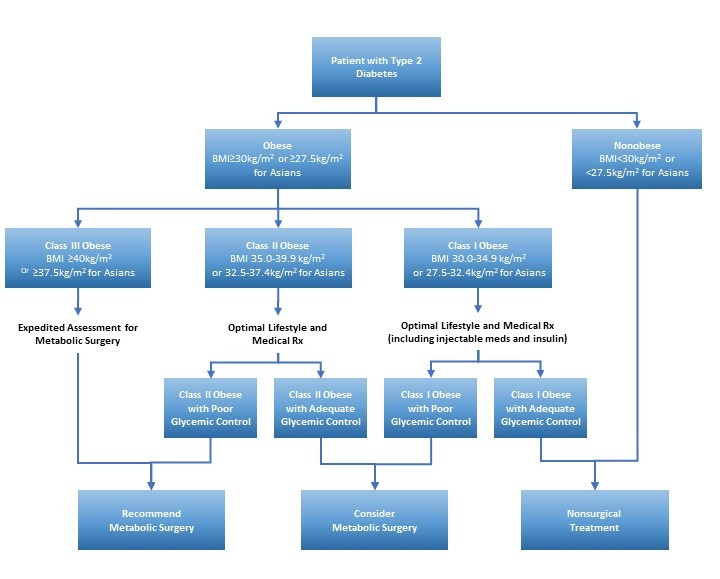
Diabetic Surgery / Metabolic Surgery
Surgery has been recognised internationally as a standard treatment modality for type 2 diabetes in appropriately selected patients. At the second Diabetes Surgery Summit in 2016, it was demonstrated with strong scientific evidence that the gastrointestinal tract plays a crucial role in metabolic regulation. Alteration of the anatomy of the gastrointestinal tract achieves excellent glycaemic control and reduces the microvascular and macrovascular complications of diabetes, thus reducing incidence of diabetic nephropathy, diabetes-induced stroke and cardiovascular diseases. Metabolic surgery is recommended for patients with BMI >37.5kg/m2 and those with BMI 32.5-37.5kg/m2 when hyperglycaemia is inadequately controlled by lifestyle and optimal medical therapy. Surgery should be considered for patients with BMI 27.5-32.5kg/m2 if hyperglycaemia is inadequately controlled despite optimal treatment with oral or injectable medications.
To put it simply, metabolic surgery should be done as soon as possible if indicated.
Due to its invasiveness, many people perceive surgery as the last resort after all other treatment modalities have been exhausted. However, diabetes is a progressively degenerative disease due to its natural course of progression. Glycaemic control after surgery relies on the endocrine function of the pancreas. If the disease deteriorates to the terminal stage when all islet cells and the endocrine function of the pancreas burn out, surgery will be ineffective. Therefore, gastrointestinal metabolic surgery is not effective for type 1 diabetes and should be performed early to stop degenerative disease progression.
Currently, scientific evidence shows that age (the younger, the better), BMI (the higher, the more effective), C-peptide (preferably > 50% of function preserved) and the duration of diabetes (preferably <5 years) are important factors to predict the glycaemic effect of surgery.
To various extents, metabolic surgery is also effective for hypertension, hyperlipidaemia, fatty liver and obesity caused obstructive sleep apnoea. Risks of diabetic nephropathy, stroke and cardiovascular diseases are lowered, as are risks of obesity-related cancers such as cardia, colon, rectum, breast and endometrium cancer. Life expectancy is expected to improve in all cases with metabolic surgery.
Your doctor will discuss the best surgical procedure for you, depending on its purpose (e.g. to treat obesity or a medical disease), your general condition and the efficacy of each treatment option. For patients with pre-existing gastroesophageal reflux, sleeve gastrectomy may not be suitable, while those who wish to have their diabetes treated may not be appropriate candidates for a gastric balloon. Additionally, patients with uncontrolled psychiatric conditions are not suitable for surgery.
The way surgery improves medical diseases is complex; each procedure has a unique mechanism. Intragastric balloons, for example, reduce body weight by limiting the amount of food intake. In such cases, the improvement in the disease is the result of losing body weight, and the effect is relatively mild.
The mechanism of laparoscopic sleeve gastrectomy is even more complex. The hunger hormone-secreting fundus of the stomach is removed, making the patients feel less hungry. With the tubular shape of the neo-gastric tube, food will stay in the stomach for only a short period of time and will pass to the distal gut soon after ingestion. This induces more rapid secretion of insulin after a meal and provides better control of blood glucose. Insulin resistance also improves after surgery, and further weight loss can be expected.
Scientifically, it has been demonstrated that alteration of the gastrointestinal anatomy in metabolic surgery induces changes in gastrointestinal hormones, bile acid, gut microbiota etc.
The risk of metabolic surgery is low and can be compared to a simple minimally-invasive laparoscopic cholecystectomy. Main short-term risks such as staple line bleeding or leakage are less than 5%, and mortality risk is less than 0.1%. Long-term risks include gastroesophageal reflux, stomal ulcer, vitamin trace element deficiency and internal organ herniation, but the rate of incidence is low.
All procedures are performed with a minimally invasive approach or single incision.
Our expert team of dietitians and physiotherapists will guide you through post-operative rehabilitation. Usually, the first three months after an operation are called the “lifestyle re-modelling period”. Our dietitians will teach you how to eat, e.g. chew slowly before swallowing, and select low-calorie foods. Regular exercise is especially important and an indispensable component of rehabilitation. In addition, our professional physiotherapists will guide you on exercise methods and their intensity. Once a healthy lifestyle habit is entrenched, you will find that body weight maintenance is not as difficult as you may imagine.
FAQ
It depends on what kind of treatment you need. Structured treatment programmes are listed with prices here.
Reimbursement after treatment is not guaranteed. In the past, treatment for obesity was mostly excluded by insurance companies and most insurance policies. This was because obesity had been regarded as a result of weak self-regulation, minimal self-discipline and lack of diet control and exercise. Today, however, obesity and metabolic disorders are seen as energy regulation disorders, with no blame solely on patients. Thus, there have been many successful cases of insurance reimbursement. Treatment for medical reasons is also regarded as essential, as long as they comply with international practice guidelines. Metabolic surgery, in particular, prevents patients from future major disease claims, such as renal dialysis, stroke or myocardia infraction attack, which are more expensive.
The usual eligibility age for bariatric and metabolic surgery ranges from 18-70. Patients below 18 are evaluated individually and according to paediatric parameters. The lowest age limit for surgical intervention is 16. Anyone below this age should be assessed by a paediatrician to exclude other problems, including behavioural, congenital or hormonal disorders. Patients above 70 are usually associated with multiple medical diseases, and the benefits of surgery are outweighed by the risks. Invasive interventions will be offered only under exceptional conditions.
There are two potential reasons for this situation: first, the family members have a similar lifestyle; second, a genetic reason. Surgery can help control body weight and is probably the only method for sustaining a healthy body weight. Children born after a mother’s weight reduction are usually not obese.
Obese mothers will usually give birth to obese children, while mothers with a normal weight will usually give birth to healthier children with a normal body weight. Bariatric surgery is not advisable during pregnancy. Patients are advised not to get pregnant within 1 year after surgery.
Postpartum obesity can usually be managed by monitored lifestyle modification. Our professional dietitians and physiotherapists provide dedicated programmes to help you achieve this. Various options are readily available to help the minority of patients who are not able to return to health.
It depends on your body condition. If you are young with adequate pancreatic endocrine function but obese, there is still a significant chance to ameliorate your diabetes through an interventional treatment.
Patient Journey
- Arrive at Hong Kong Sanatorium & Hospital
- Consult our dietitian at Dietetics Centre
- Basic vital signs and parameter assessment (BMI) +/- body composition analysis
- Patient education by a case manager / nurse specialist
- Join a Diet /Exercise/Introductory Package
- Refer to a Surgeon (for all potential surgical candidates)
- Refer to an Endocrinologist (for candidates interested in pharmacotherapy)
- Surgery
- Postoperative follow-up