



Optometric and Contact Lenses Services

Based on your individual needs and eye condition, the Centre offers a diverse choice of optical glasses and contact lens fitting services.
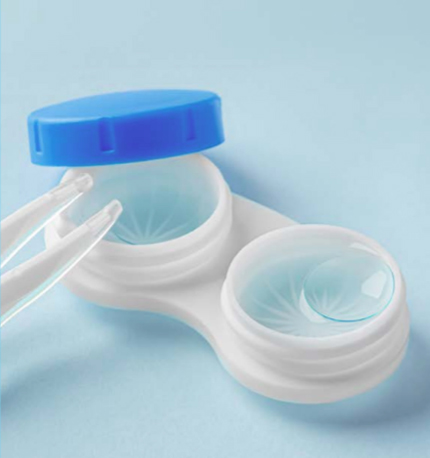

Different types of contact lenses
There are several types of contact lenses available on the market:
- Soft Lenses
Soft contact lenses are made of soft, flexible plastics, which are more comfortable and easier to adapt than rigid gas permeable lenses. Some soft lenses are made of silicone hydrogel, allowing more oxygen to pass through to the cornea.- Disposable lenses are removed prior to sleeping and replaced on a daily, bi-weekly or monthly basis, depending on the type of lens. Disposable lenses in general are higher in cost, but the chance of developing an eye infection or contact lens complication is less. However, if the lenses are over-worn or not properly cleaned and disinfected, some risks are still present.
- Extended-wear lenses are designed for overnight wearing, typically for six consecutive nights or more. Length of continuous wear depends on the lens type and your eye care professional’s evaluation of your tolerance for overnight wearing.
- Conventional lenses are long-term lenses that are usually worn for about one year before being replaced. These lens should be removed prior to sleeping and need regular and proper cleaning and disinfection to avoid risk of infection.
- Rigid Gas Permeable (RGP) Lenses
RGP lenses are made of rigid gas permeable materials that allows oxygen to pass through to the eyes. They are easy to handle, more durable and more resistant to deposit build-up than soft contact lenses. They generally give clearer vision, especially for patients with high astigmatism, and are more suitable for patients with dry and allergic eyes. However, they are not as comfortable initially as soft contact lenses and wearers may take a few weeks to get used to the lens.

Contact Lenses for different purposes
Contact lenses for correcting refractive error are designed to improve vision for patients with refractive errors such as near-sightedness (myopia), far-sightedness (hyperopia) and astigmatism. Beside monofocal contact lens, toric and multifocal contact lenses are now also available to correct astigmatism and presbyopia.
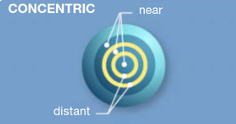
Multifocal contact lenses are available to correct presbyopia. The lens has multiple prescriptions in one lens, allowing wearers to see clearly at different distances. They are in many different designs. The most common design is a set of concentric circles of lens powers prescribed for various viewing distances. Multifocal contact lenses can give you acceptable vision for most of your daily activities but you may still need glasses for specific tasks such as driving at night or reading small print.
Keratoconus contact lenses improve vision for patients with keratoconus. Keratoconus is a progressive, debilitating eye disease characterised by degenerative thinning and protrusion of the central cornea, leading to distorted vision. Symptoms include photophobia, visual distortion, halos around lights, ghosting and glare, decreased vision, and monocular diplopia (double vision). While spectacles and soft contact lenses cannot correct vision caused by keratoconus, most individuals can achieve functional vision with therapeutic rigid gas permeable (RGP) contact lenses. These uniquely designed lens improve vision by providing a clear optical lens that masks the distorted areas of the cornea to create a smooth, regular optical surface over the patient’s irregular, cone-shaped cornea.
Orthokeratology (Ortho-K, OK lens) are specially designed RGP contact lenses that alter the shape of the cornea for temporary correction of low degrees of myopia. They are usually worn overnight while sleeping, these lenses gently reshape the cornea, improving vision during the day without the need of glasses or daytime contact lenses. However, the cornea gradually returns to its original shape after discontinuing Ortho-K lenses wear for a few days, leading to the recurrence of refractive errors. While Ortho-K lens offers a convenient vision correction option, it is important to be aware of potential risks associated with overnight wear.
Prosthetic contact lenses are contact lenses that are made to assist patients who have experienced serious eye injuries or diseases that have altered the appearance of their eyes. These lenses are made with colour painted on them. The lenses can be designed as simple as a solid colour to an advanced painted iris-like design to look as much as the natural eye as possible. These lenses can cover up any scarring or disfigurement on the cornea, helping to improve the appearance of their eyes. Prosthetic contact lenses can also help people with aniridia or albinism by reducing their sensitivity to light.
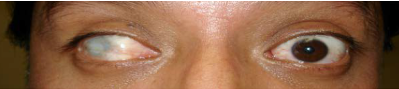
Without prosthetic contact lens
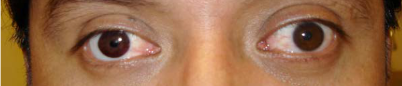
With prosthetic contact lens
Therapeutic bandage lenses are a type of extended wear contact lens used as bandages for various eye conditions that cause eye pain. They are used to treat conditions such as corneal abrasions after injury, recurrent erosion, bullous keratopathy, or post-corneal surgeries like phototherapeutic keratectomy. These lenses promote corneal healing, serve as a protective barrier, and reduce discomfort caused by friction from blinking during the recovery phase. Bandage lenses are primarily made of silicone hydrogel, a material with high oxygen permeability that facilitates corneal healing. Unlike other protective options, such as pressure patching, bandage contact lenses allow for easy medication administration to the eyes.

Contact Lens Complications
Wearers should follow eye professionals’ instruction in using contact lenses. Risks of contact lens wearing include conjunctival and corneal complications secondary to hypoxic changes, chemical toxicity, hypersensitivity reactions, mechanical trauma, infection and desiccation. If the eyes are very dry, the corneal surface can get damaged, leading to potential issues like corneal abrasion, infection, or ulcer. Prolonged wearing of contact lenses could also impact your vision and cause issues like corneal oedema or neovascularisation due to the lack of oxygen supply to the cornea. Vision may be impaired in these situations.
Another common complication, more often associated with soft contact lenses, is giant papillary conjunctivitis. This is an allergic reaction to lens protein deposits, contact lens material or solution. It will cause redness, itchiness, increased mucus secretion, blurry vision and contact lens intolerance.
To prevent complications related to wearing of contact lenses, you should have regular eye check-ups. It is advisable to see a doctor if your eyes are itchy, red, irritated, tearing or painful.


Happy Valley
- Address:
- 4/F, Li Shu Fan Block,
Hong Kong Sanatorium & Hospital,
2 Village Road, Happy Valley, Hong Kong
- Service hours:
-
Monday to Friday: 9:00 am - 5:00 pm
Saturday: 9:00 am - 1:00 pm
Closed on Sundays and Public Holidays
Consultation by Appointment
- Tel.:
- (852) 2835 8880
- Email:
- [javascript protected email address]
- Fax:
- (852) 2892 7510
- WhatsApp:
-
(852) 2835 8890
(For non-emergency cases)


Admiralty
- Address:
- 21/F, One Pacific Place,
88 Queensway, Hong Kong
- Service hours:
-
Monday to Friday: 9:00 am - 5:00 pm
Saturday: 9:00 am - 1:00 pm
Closed on Sundays and Public Holidays
Consultation by Appointment
- Tel.:
- (852) 2855 6700
- Email:
- [javascript protected email address]
- Fax:
- (852) 2523 7660
- WhatsApp:
-
(852) 2855 6700
(For non-emergency cases)